As floating offshore wind moves towards commercial-scale deployment, understanding how these technologies interact with the marine environment is becoming increasingly important. Through DemoSATH Lab, Saitec Offshore Technologies is using its operating floating wind demonstrator as a real-scale testing ground to study environmental interactions, improve monitoring methods, and explore solutions that support coexistence with marine biodiversity.
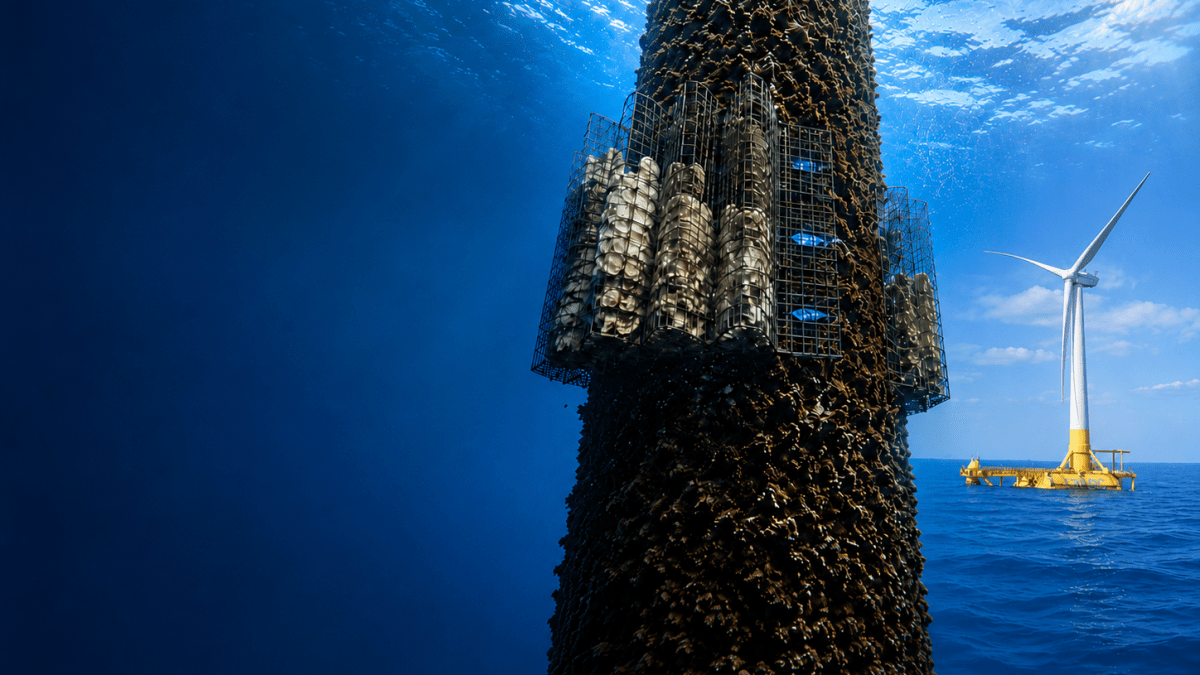
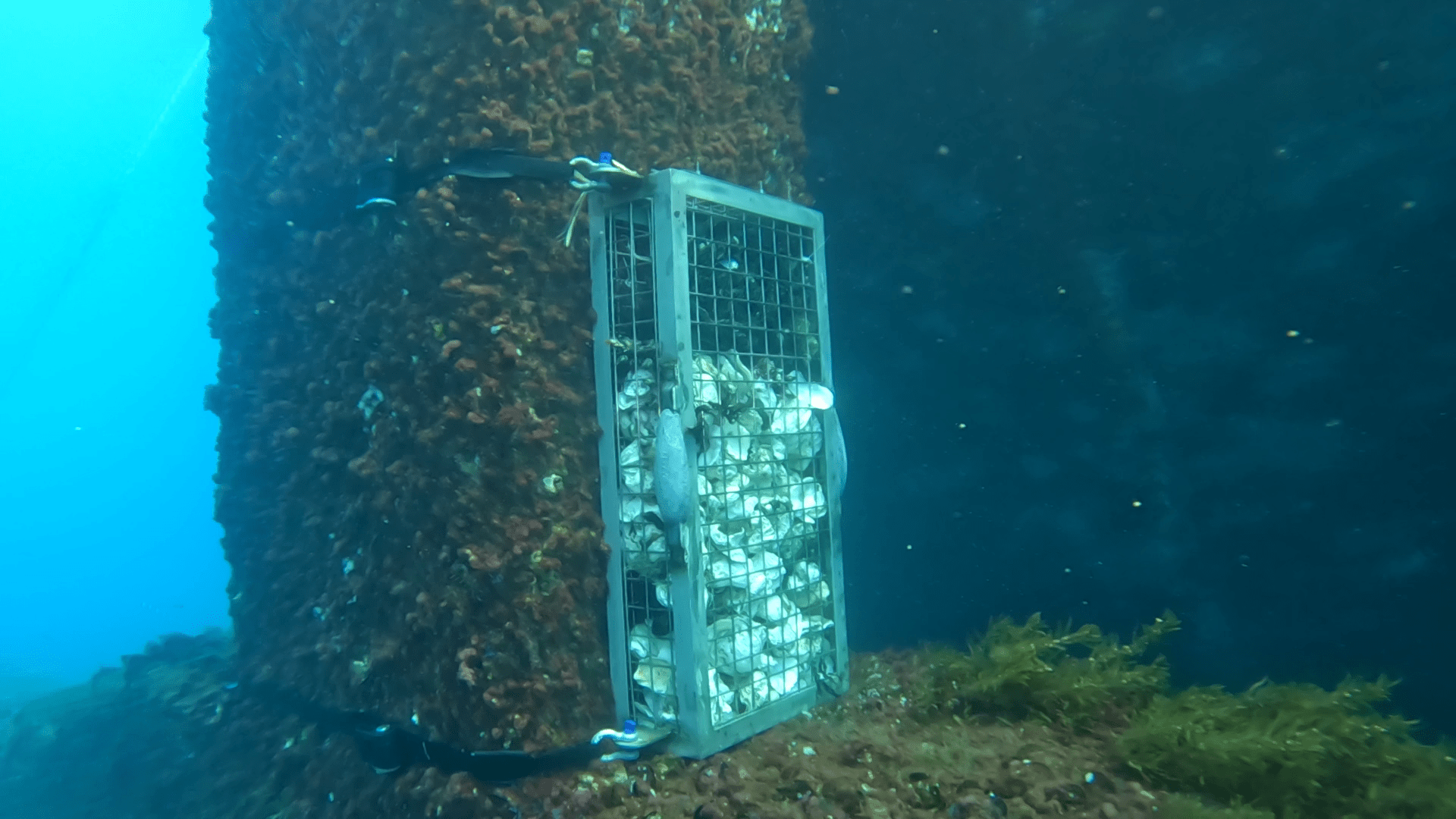
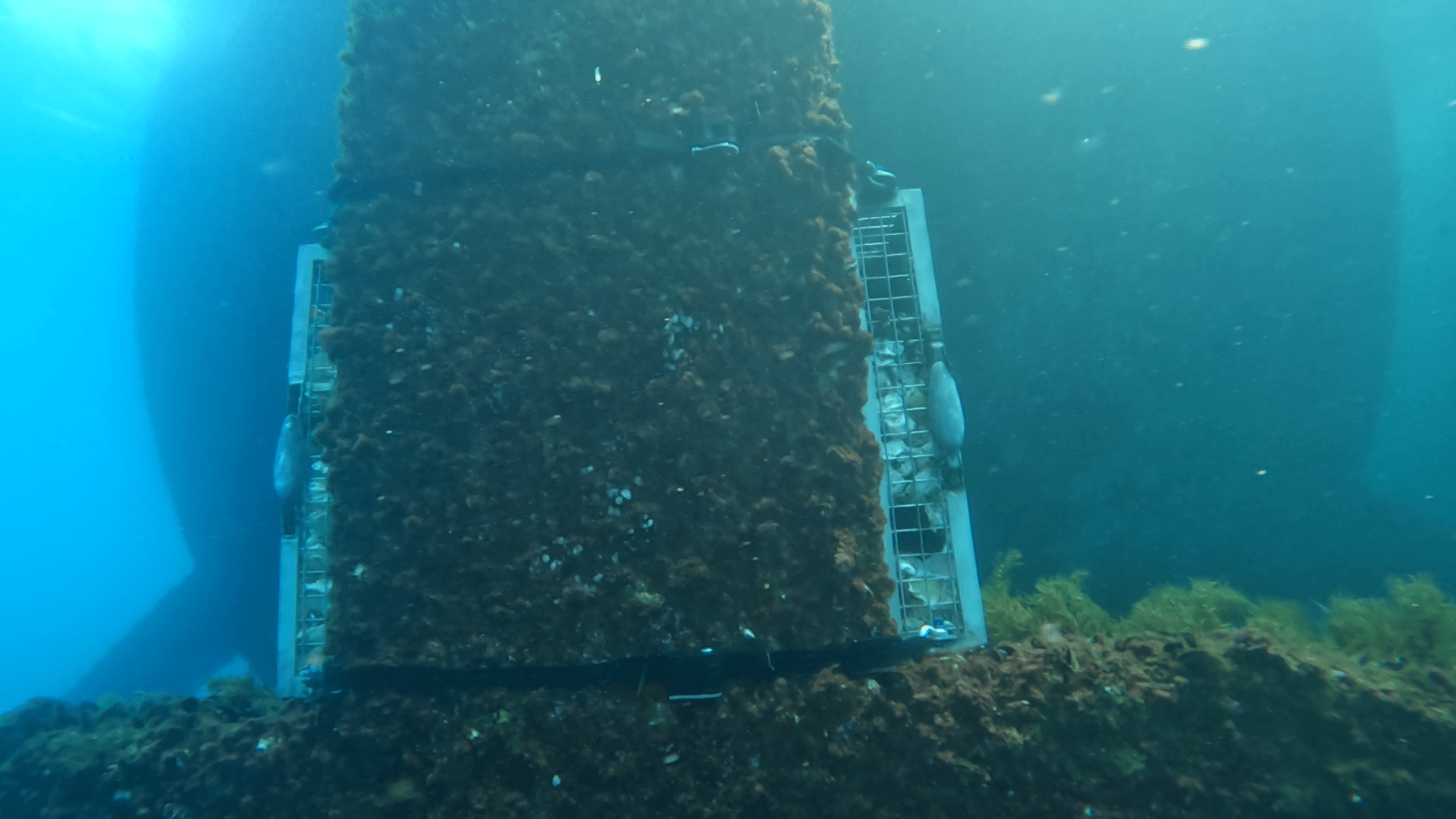
This work builds upon previous initiatives at the site, including the installation of biomimetic reef solutions on the submerged section of the platform.
Test to combine floating wind and aquaculture
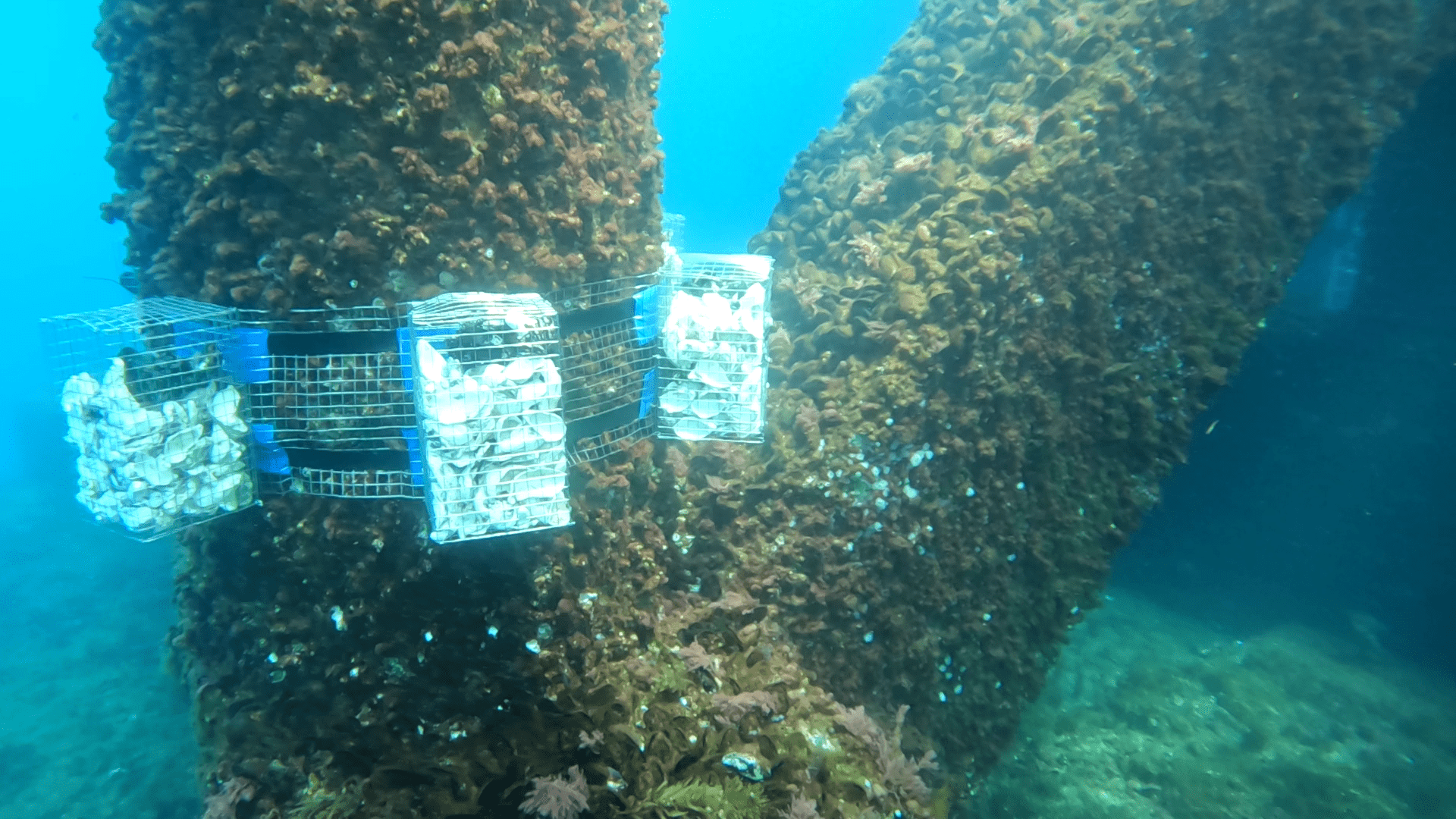
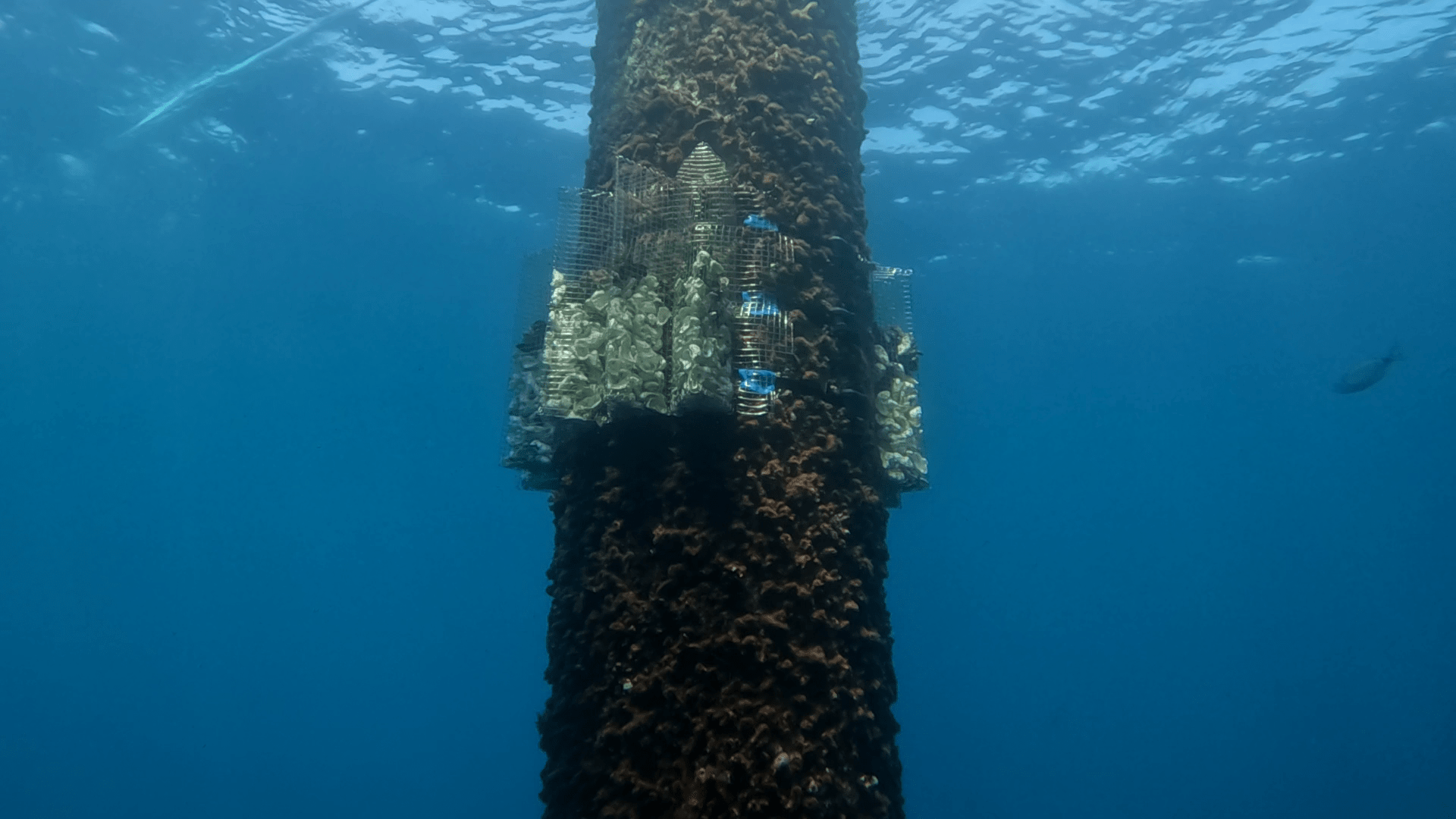
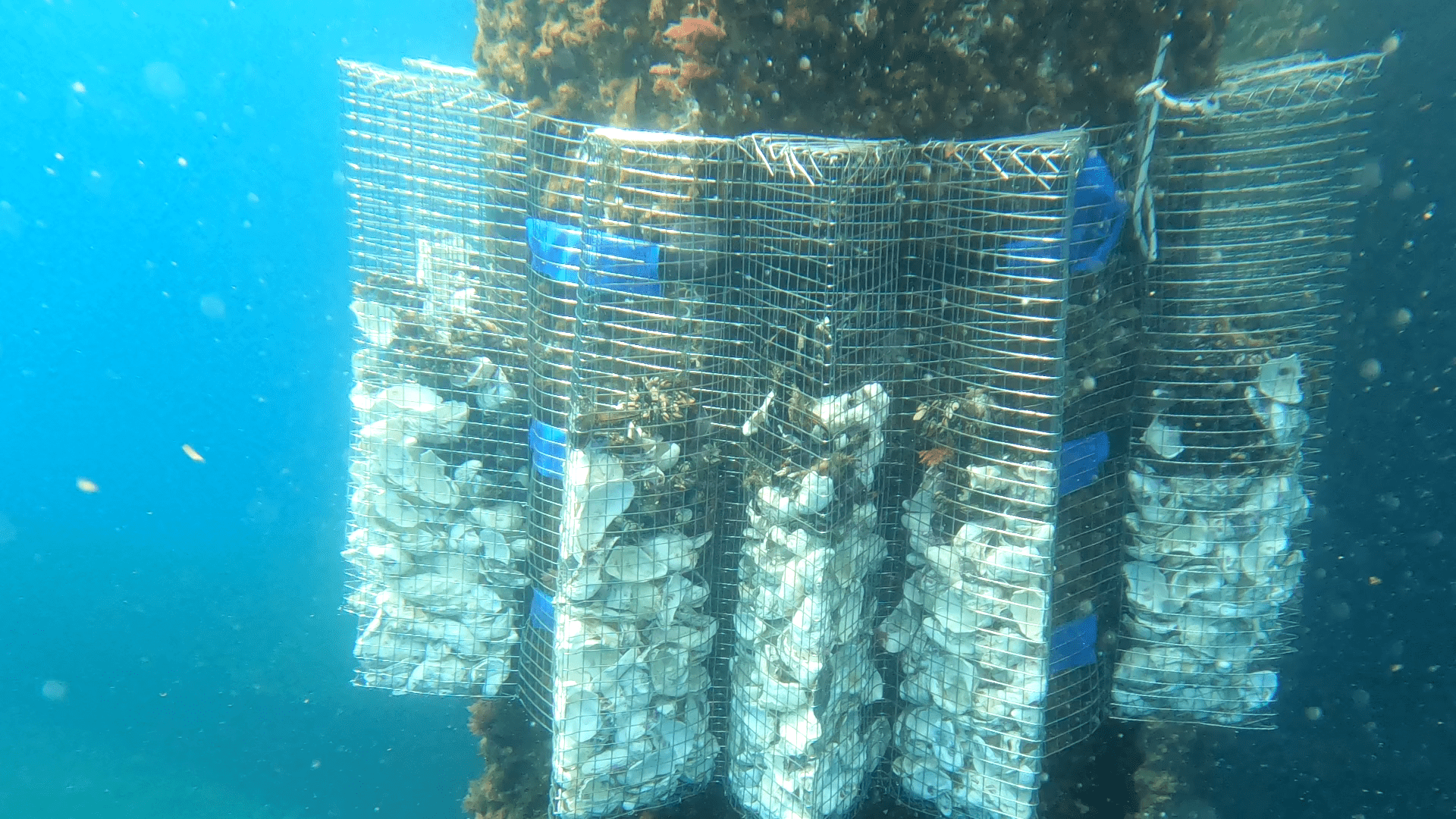
The recent offshore operation marks a new step in DemoSATH Lab’s biodiversity programme and forms part of the AQUASATH Project, with the installation of several complementary systems designed to study how floating wind foundations can host and support marine life while exploring their potential integration with aquaculture activities.
The work includes Nature Inclusive Design (NID) elements adapted to DemoSATH’s underwater columns and filled with shells and mussels to create new surfaces and microhabitats for marine organisms and provide growing, sheltering and feeding areas for species around the floating foundation.
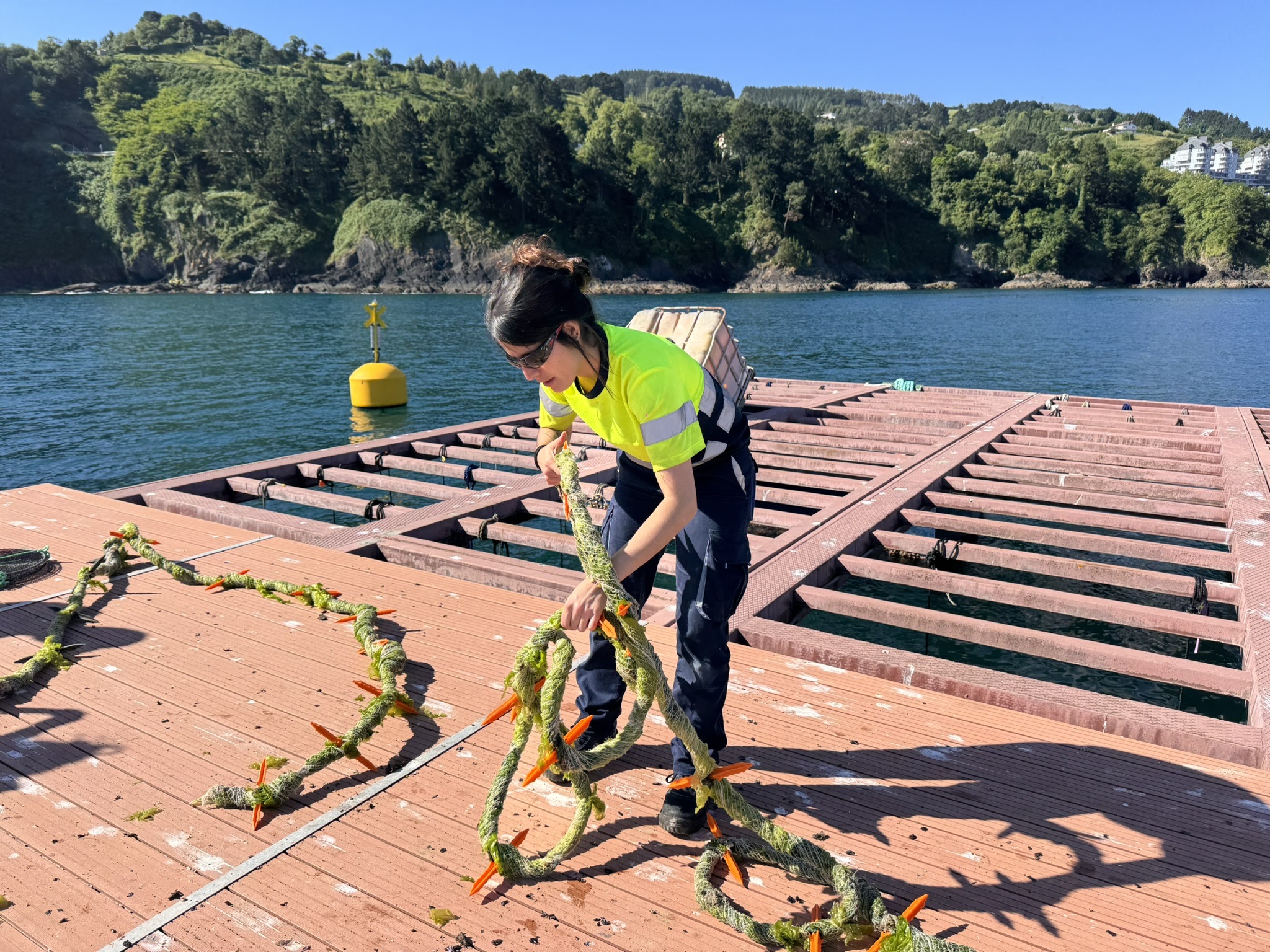
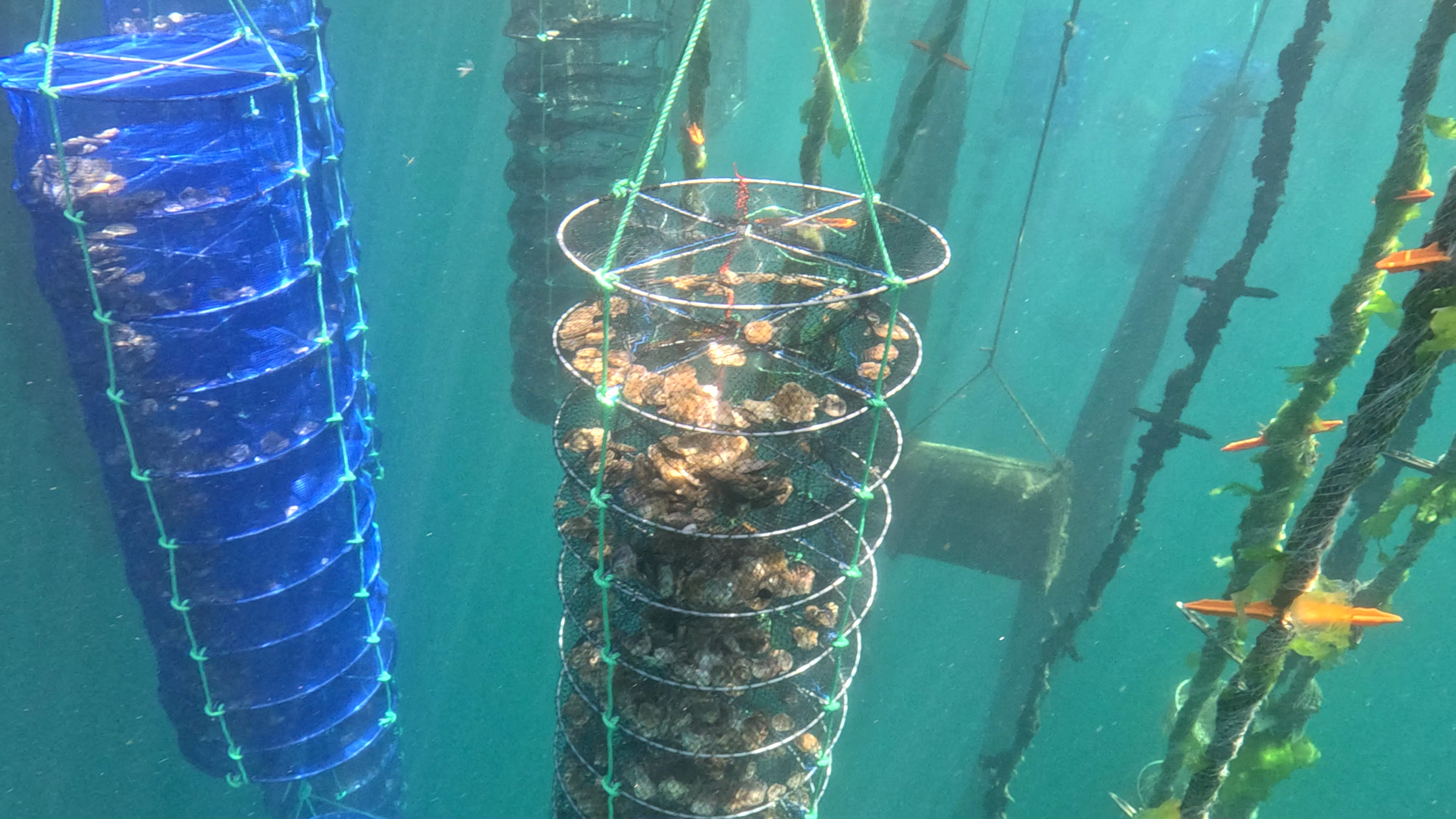
A key component of the programme is a multi-trophic aquaculture pilot integrated into the platform. By utilizing a mother rope to suspend lantern nets, mussel ropes, and collector ropes, this trial assesses the viability of cultivating European flat oysters (Ostrea edulis), pullet carpet shell clam (Venerupis corrugata), mussels, and Ulvaalgae alongside floating offshore wind operations, exploring the synergies of such co-use.
Preparation and handling of marine elements
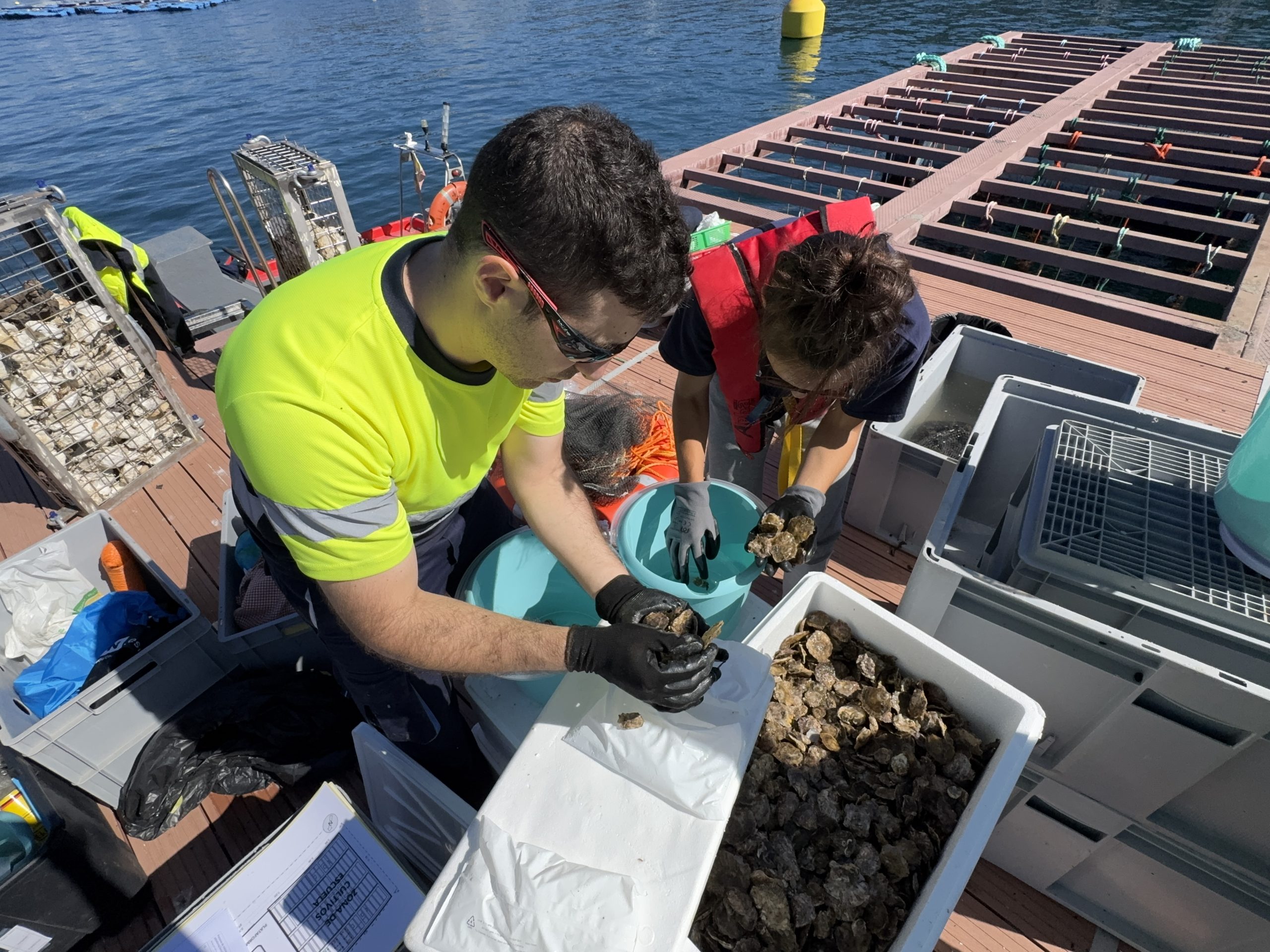
During the first stage, the live material was collected and the NID elements were temporarily installed in a mussel raft before their final transfer to DemoSATH.
Each element was previously identified with a unique number, colour code and associated function or type of live material, allowing full traceability throughout the operation.
Once at the raft, the working area was organised by separating the elements, tools and live material. The first elements prepared were those containing algae and mussels, followed by those associated with grooved carpet shell and native oyster. Each element was then attached to the raft, checked to ensure it was properly secured, and recorded on the raft layout plan according to its identification number.
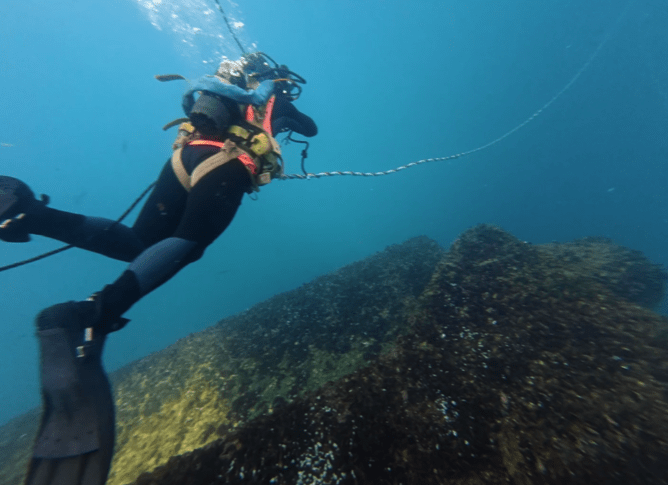
During the second stage, the elements were collected from the raft and transported offshore for their final underwater installation on DemoSATH. The operation required coordination between the main vessel, support teams, mooring personnel and professional divers, who were responsible for positioning and securing the system on the floating wind platform.
A collaborative effort
The operation was coordinated by Saitec Offshore Technologies, which managed the protocol, installation checklists, documentation control and overall follow-up of the works.
The live material was supplied by Mar Ceibe, while Instituto Kardala provided the raft used for the temporary suspension of the elements and technical support during the first day of operations. Kotazero carried out the underwater works, including the collection of the elements from the raft and their final installation on DemoSATH. Amarradores de Santander provided the main vessel and operational support during the second stage, including the mooring works required on the platform.
We would like to thank all the teams involved for their support and work in successfully completing these activities, including Grupo Peñascal Kooperatiba, which contributed to the creation of the NID elements.
Learning for future floating wind farms
Beyond the installation itself, this action provides valuable practical knowledge on how nature-inclusive solutions can be adapted, handled, transported and installed on floating offshore wind structures.
Testing these solutions in real offshore conditions is essential to understand their technical feasibility, operational requirements and potential contribution to marine biodiversity. The lessons learned from DemoSATH can help inform future floating wind farms, supporting designs that integrate environmental considerations from the earliest stages of development.
Through DemoSATH Lab, Saitec Offshore Technologies continues to explore how floating offshore wind can move beyond energy generation and contribute to a better understanding of coexistence with the marine environment.
This project has been supported by the expense budget of the Department of Industry, Energy Transition and Sustainability of the Basque Government and the European Regional Development Fund (ERDF)
This website uses cookies so that we can provide you with the best user experience possible. Cookie information is stored in your browser and performs functions such as recognising you when you return to our website and helping our team to understand which sections of the website you find most interesting and useful.
Strictly Necessary Cookies
Strictly Necessary Cookie should be enabled at all times so that we can save your preferences for cookie settings.
If you disable this cookie, we will not be able to save your preferences. This means that every time you visit this website you will need to enable or disable cookies again.
3rd Party Cookies
This website uses Google Analytics to collect anonymous information such as the number of visitors to the site, and the most popular pages.
Keeping this cookie enabled helps us to improve our website.
Please enable Strictly Necessary Cookies first so that we can save your preferences!




 English
  Spanish