Hull construction
Manufacture of the floating concrete structure that supports the wind turbine.

SATH's industrial approach uses existing port capabilities to optimise manufacturing, reduce timescales and support the transfer of units to their deployment sites.
Manufacture of the floating concrete structure that supports the wind turbine.
The construction strategy avoids tilting operations and reduces dependence on heavy-lift cranes.
Manufacturing can rely on gantry slipform systems already used in port environments.
Adapting the platform to higher-power turbines is resolved by adjusting the formwork while maintaining the industrial logic of the process.
The gantry slipform systems already operating in ports can build this platform without specific new equipment. The hull is concreted in a continuous pour, integrating walls and internal bulkheads in the same sequence.
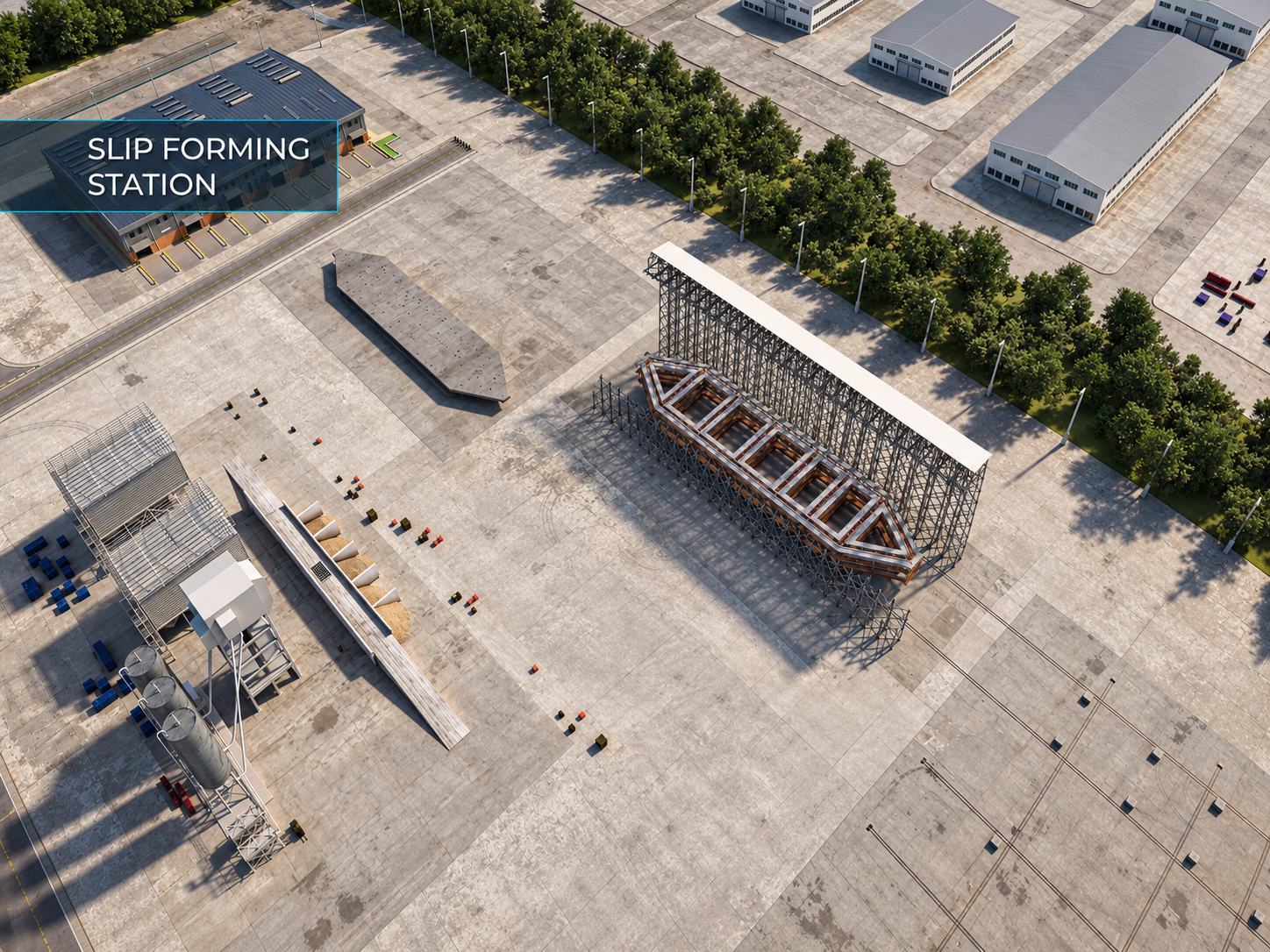
DemoSATH has already demonstrated a port-based manufacturing logic and local supply chain. SATH's industrial evolution keeps that idea and directs it towards repeatable production: validated behaviour, a new way of building it for larger-scale projects.
The platform is designed around repeatable processes, adaptable formwork and a construction sequence prepared to scale from a demonstrator unit to commercial series.
Local concrete manufacturing reduces transport and uses materials and capabilities close to the project, strengthening a more efficient supply chain.
Known port processes and reduced dependence on complex manoeuvres help control cost, schedule and industrial risk.
Building close to the wind farm activates local civil works capabilities, port suppliers and regional employment, as already seen in the DemoSATH pathway.
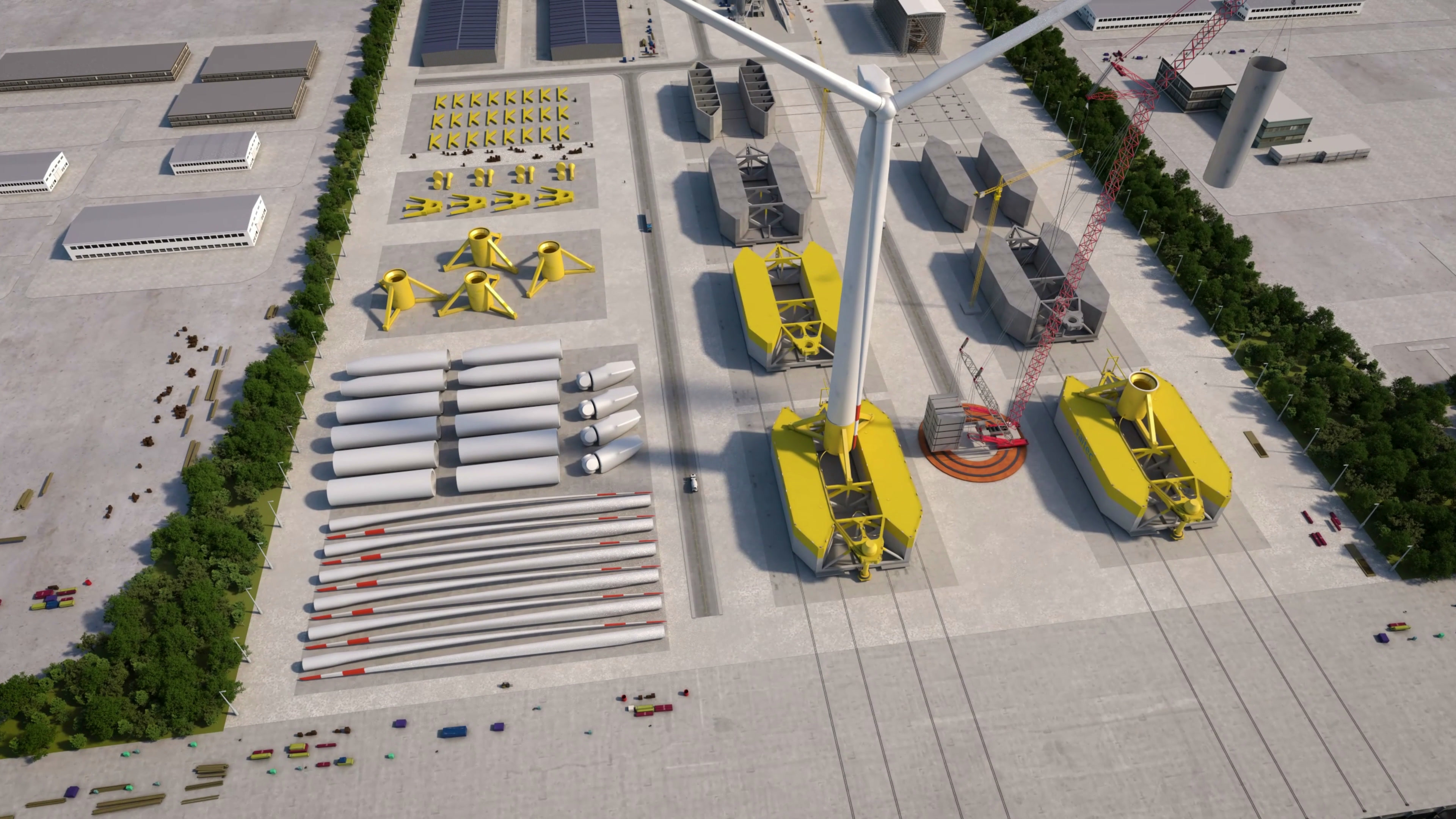
SATH evolves its manufacturing while preserving the hydrodynamic behaviour validated by DemoSATH. The optimised platform retains the stability provided by its geometry and has motion periods in line with those observed in DemoSATH.
Yes. The SATH industrial approach uses existing port capabilities to bring manufacturing closer to the project, reduce transport and support the transfer of units.
Concrete supports continuous, repeatable construction processes compatible with local supply chains, while keeping the platform ready for serial production.
The optimised platform retains the stability provided by its geometry and has motion periods in line with those observed in DemoSATH.
Port-based manufacturing activates local civil works capabilities, industrial suppliers and regional employment, strengthening the economy around the project.