Saitec Offshore Technologies is leading IN2FLOAT, a new research project aimed at developing the methodologies, models and solutions needed to advance towards the industrialisation and serial production of floating wind platforms.
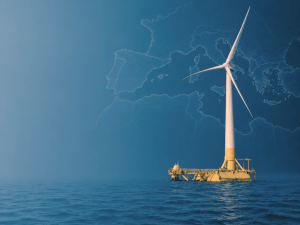
The project builds on Saitec’s experience with its SATH (Swinging Around Twin Hull) technology and, in particular, with DemoSATH, its full-scale demonstrator deployed at BiMEP, off the coast of Armintza. Following the validation of the technology and the knowledge gained under real offshore conditions, the next challenge is to prepare for the transition towards an industrial model capable of meeting the deployment rates required by the future floating wind market.
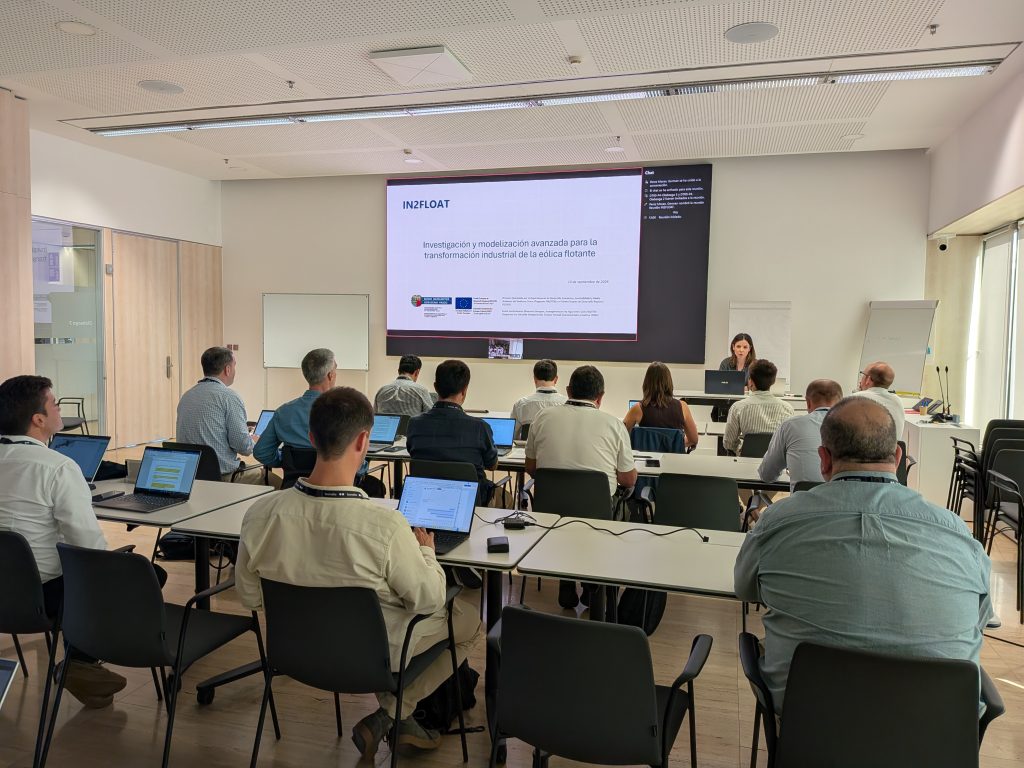
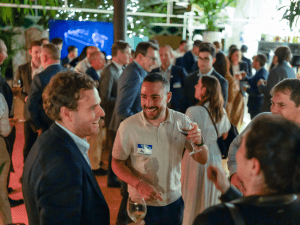
IN2FLOAT is already underway. The project recently held its kick-off meeting, where our R&D Engineer Ane Cortina presented the key aspects of the project to the consortium partners, helping to align the different areas of expertise and define the next steps for the project.
From demonstration to serial production
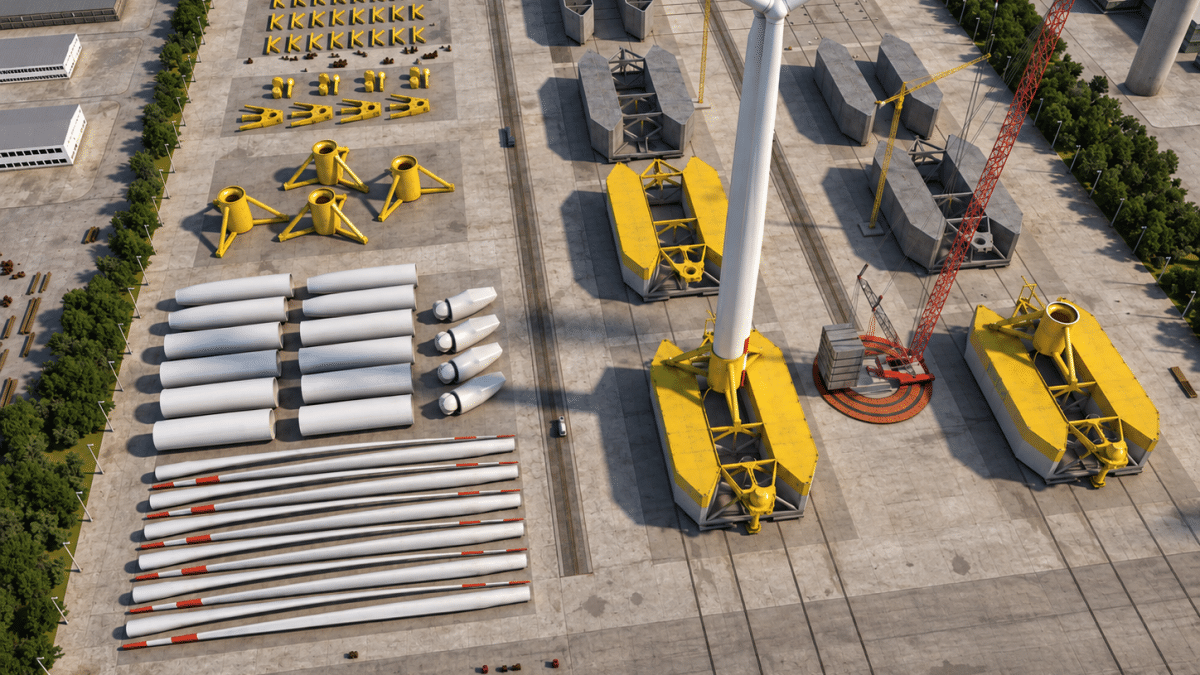
The industrialisation of floating wind requires a shift from project-specific solutions towards more modular, standardised, repeatable and scalable processes. IN2FLOAT will address this challenge by considering platform design, manufacturing, logistics, transport, installation and operation as part of an integrated approach.
The project will investigate Design for Manufacturing and Assembly (DfMA) and Design for Installation and Operation (DfOI) methodologies specifically adapted to floating wind, with the aim of reducing complexity, optimising critical interfaces and facilitating both serial production and offshore operations.
IN2FLOAT will also develop an advanced multi-domain co-simulation framework to virtually assess different alternatives before implementation, integrating design, manufacturing, logistics and installation.
Research activities will also cover new materials, connections and protection systems, serial manufacturing and automation concepts, advanced offshore logistics, transport and installation models, as well as innovative mooring, connection and dynamic control concepts.
All the knowledge generated will be integrated into a cross-cutting knowledge platform, connecting requirements, designs, models, metrics and results to support decision-making throughout the industrialisation process.
An integrated industrial approach
IN2FLOAT adopts a systemic approach in which the floating platform is considered as a complete industrial product, rather than simply a collection of individual components.
The project also incorporates a failure-driven approach based on Failure Modes, Effects and Criticality Analysis (FMECA), allowing critical technical and operational failure modes to be translated into functional, mechanical and operational requirements from the early stages of development.
Strengthening the Basque floating wind value chain
The IN2FLOAT consortium brings together capabilities in offshore engineering, manufacturing, materials, components, logistics, digitalisation and simulation to address one of the key challenges facing the next stage of floating wind development.
The participating industrial companies are Saitec Offshore Technologies, Core Marine, Ditrel Industrial, Beugin Garay, Glual Energy, Hine, GH Cranes & Components, Innomat, Erreka and Navacel Process Industries, together with Segula Technologies.
The research and technology organisations involved include Tecnalia, Ikerlan, Mondragon Unibertsitatea, Vicomtech and Cidetec, with the participation of the BASQUENERGY Cluster.
The project is aligned with the priorities of the Basque Country’s Floating Wind Technology Strategy and with the European research and innovation priorities identified by ETIPWind, helping to strengthen the industrial and technological capabilities of the Basque Country in a sector that will play an important role in the energy transition.
The project is funded by the Basque Government’s ELKARTEK 2026 programme and the European Regional Development Fund (ERDF).


 English
  Spanish