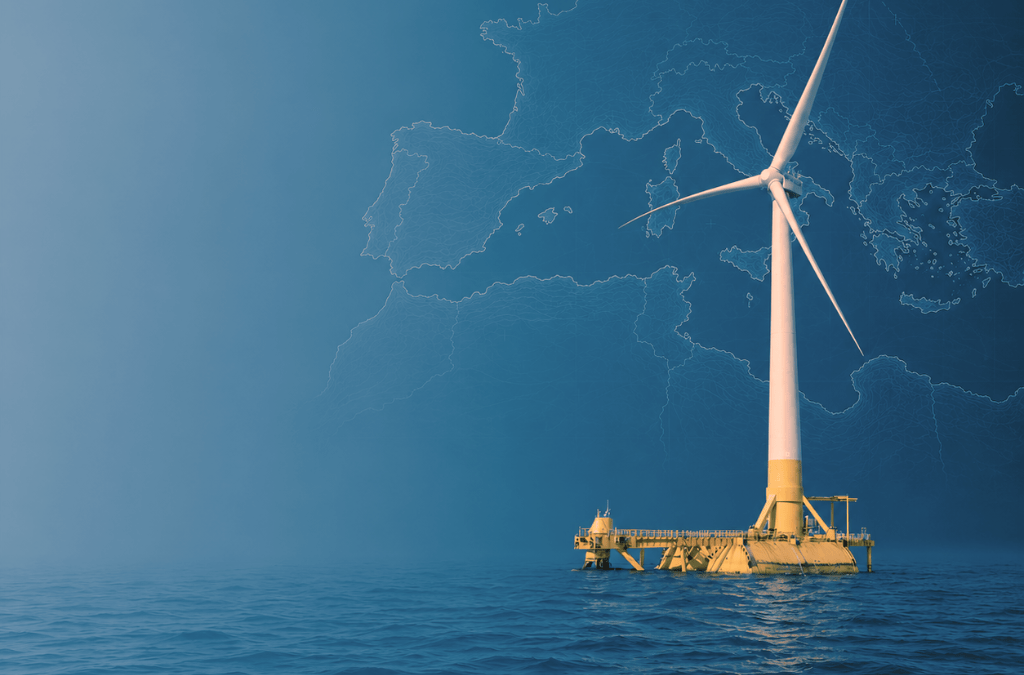
A recent study examines the technical, environmental and industrial conditions needed to advance floating wind in the Mediterranean. Several of the issues highlighted are already being explored through DemoSATH and its associated monitoring and innovation programmes.
The Mediterranean offers significant potential for floating offshore wind. Its deep waters, often located relatively close to the coast, make floating solutions especially relevant in areas where bottom-fixed foundations are not technically or economically suitable.
However, the transition from demonstration projects to commercial deployment will depend on more than technological performance or reductions in the levelised cost of energy.
The study Potentials and challenges of floating wind in the Mediterranean Sea: A joint industrial and academic perspective, involving Politecnico di Torino and WindEurope, analyses the main factors that could determine the development of the sector in the region.
Its conclusions point to four closely connected priorities:
- solutions adapted to Mediterranean conditions;
- coordination between permitting, auctions, grid infrastructure, ports and supply chains;
- early integration of biodiversity and coexistence with other marine activities;
- predictable market frameworks that allow long-term industrial planning.
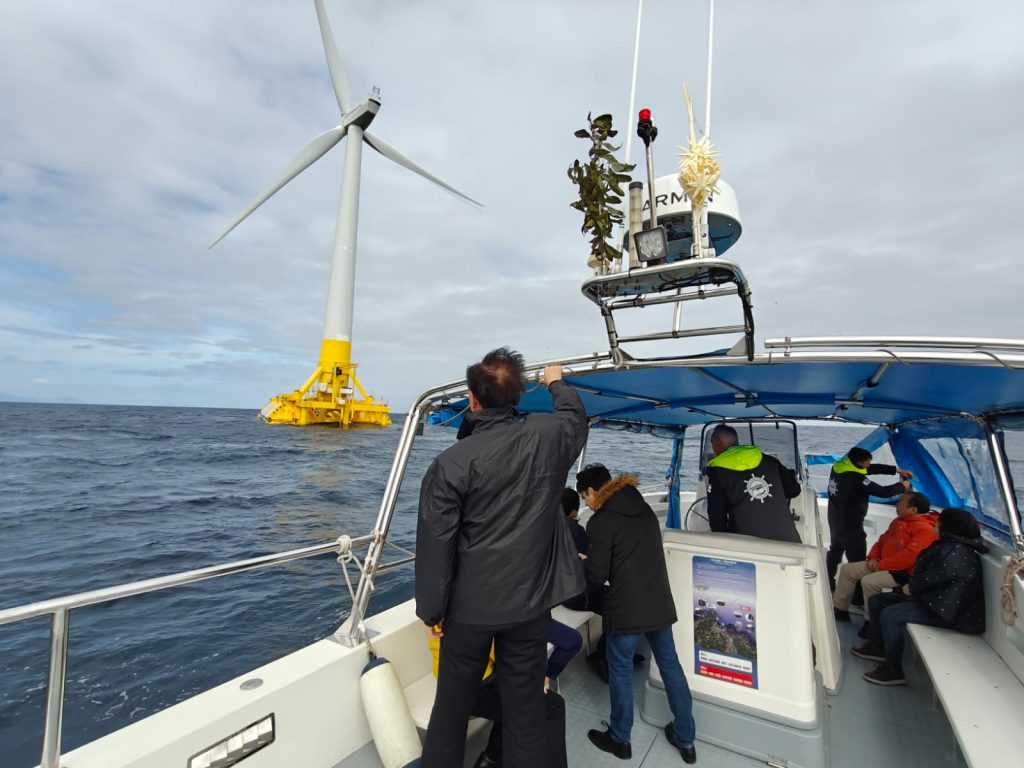
Although DemoSATH is operating in the Bay of Biscay rather than the Mediterranean, it provides practical experience in many of the areas highlighted by the study. SATH is not designed for a single sea basin: the technology can be adapted to the specific metocean conditions, water depth, turbine requirements and industrial constraints of each site.
DemoSATH therefore provides real-world experience across technology validation, construction, marine operations, environmental monitoring and project coordination that can inform the development of tailored SATH solutions in the Mediterranean and other offshore markets.
Designing for local conditions
One of the study’s main conclusions is that floating wind solutions must be adapted not only to local metocean conditions, but also to the industrial capabilities, ports and supply chains available in each region.
DemoSATH provides a practical example of this approach. Around 75% of the platform’s construction budget was awarded to companies located within 25 km of the construction site, demonstrating the capacity of floating wind projects to mobilise existing local expertise in civil works, concrete structures, steel components, assembly and marine operations.
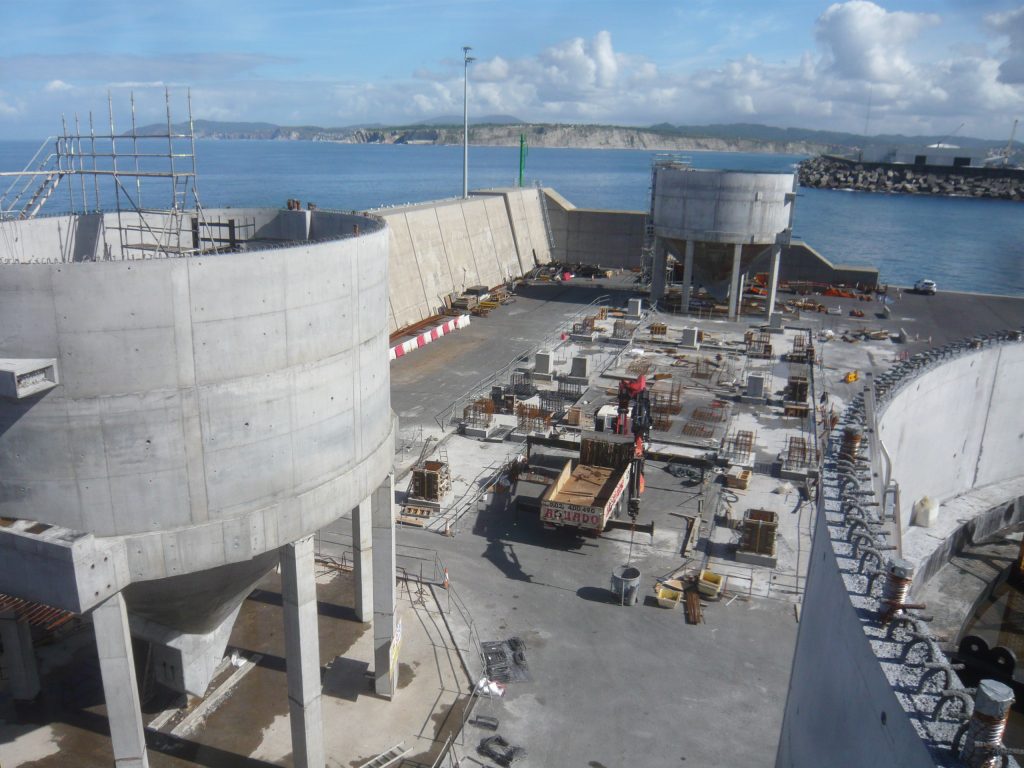
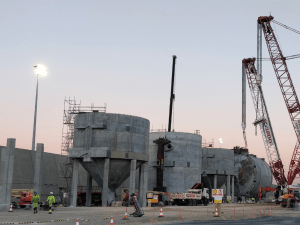
This high level of local participation was closely linked to the characteristics of SATH Technology. The platform is based on modular and prestressed concrete elements, which can be produced and assembled using capabilities that are already widely available in many regions. The use of concrete therefore reduces dependence on a limited number of specialised manufacturing centres and makes it possible to combine the local civil-construction sector with the offshore supply chain.
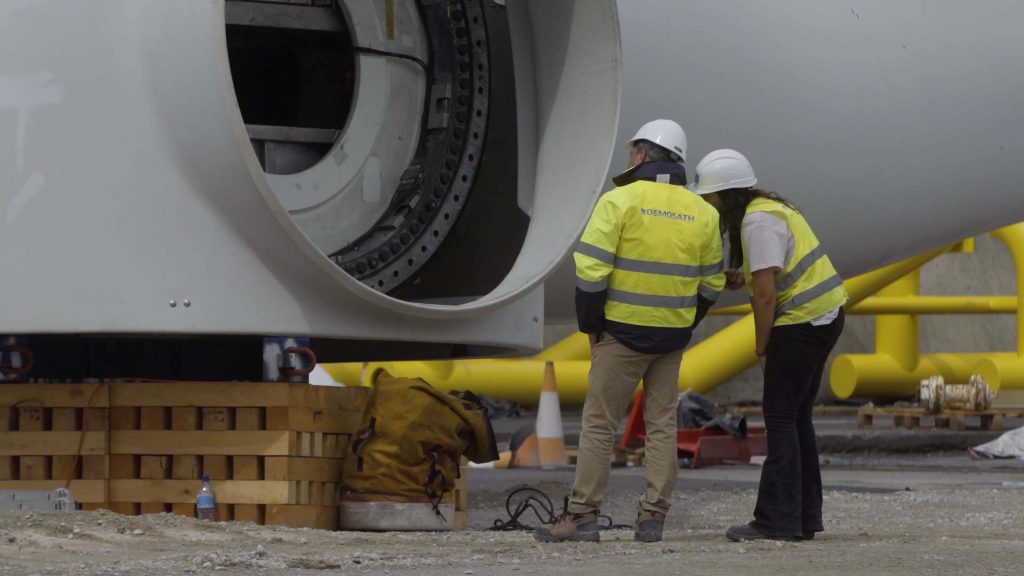
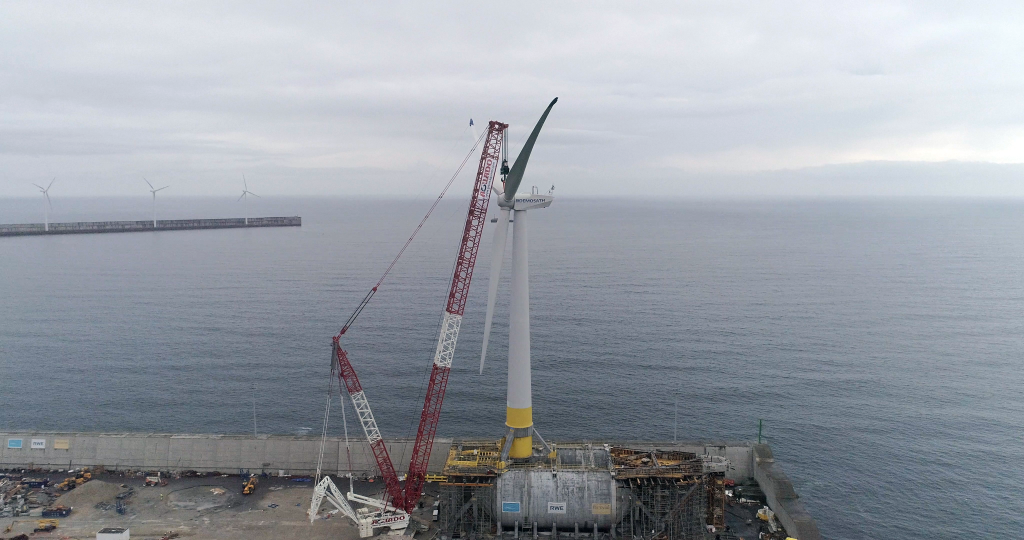
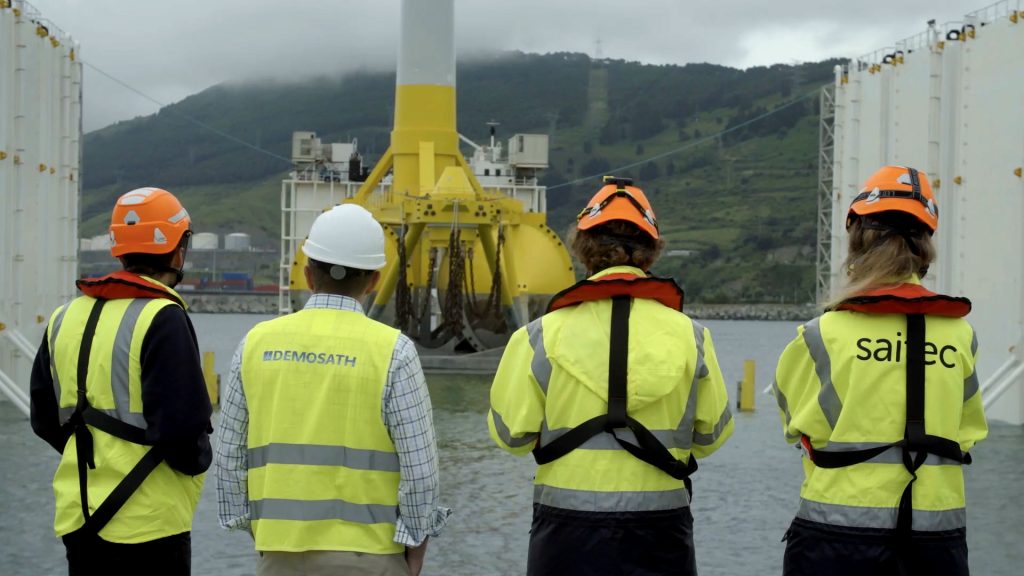
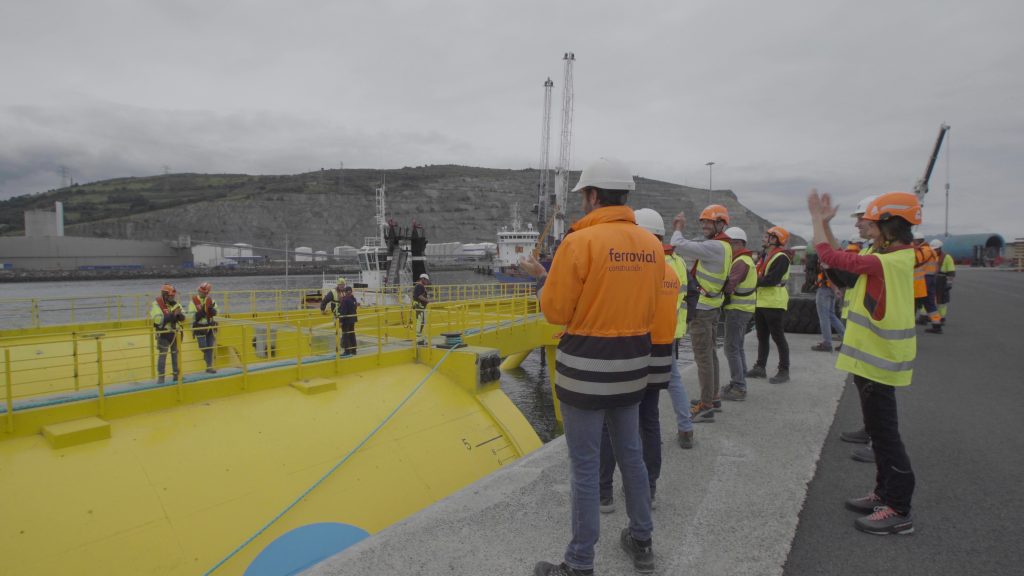
In DemoSATH, the structure and wind turbine were assembled in the Port of Bilbao before being towed to the BiMEP test site. This experience showed how platform design, port infrastructure, construction methods and local manufacturing can be considered together from the early stages of a project.
This could be particularly relevant for Mediterranean deployment. Rather than requiring every region to create an entirely new industrial base, SATH can be adapted to the materials, contractors, ports and construction capabilities already present locally. This can facilitate regional participation while reducing transport requirements and supporting a more distributed floating-wind supply chain.
At commercial scale, this industrial approach will also depend on sufficient visibility for ports, manufacturers and suppliers to invest in infrastructure, production capacity and workforce development. DemoSATH contributes to this process by providing operational evidence that can support the optimisation and preparation of future projects.
Coordinating the wider project environment
The study stresses that floating wind deployment depends on the coordinated development of planning, permitting, auctions, grid infrastructure, ports and industrial capacity. These elements must progress in parallel: delays or uncertainty in one area can affect project timelines, investment decisions and overall viability.
DemoSATH provides practical experience of this coordination at project level, bringing together engineering, permitting, port operations, local suppliers, marine logistics, grid connection, offshore installation and commissioning within a single demonstration project.
This experience also shows how closely these activities are interconnected. Platform design affects construction and port requirements; logistics influence assembly and towing strategies; grid connection must be aligned with offshore installation and commissioning; and marine operations require several specialised teams to work within a common project schedule.
These interdependencies become increasingly important as projects move towards commercial scale, when a larger number of units, contracts and stakeholders need to be coordinated. Understanding them at demonstration level can help identify potential bottlenecks earlier and support more efficient planning of future developments.
At the same time, the study makes clear that this project-level coordination needs to be supported by predictable permitting, auction and market frameworks. Without sufficient continuity in the project pipeline, investment in ports, manufacturing facilities and specialised supply chains becomes more difficult.
Understanding environmental interactions
The study calls for environmental considerations to be incorporated from the earliest planning and design stages. This includes not only the assessment of potential impacts, but also the definition of monitoring strategies capable of identifying changes over time and generating evidence for future projects.
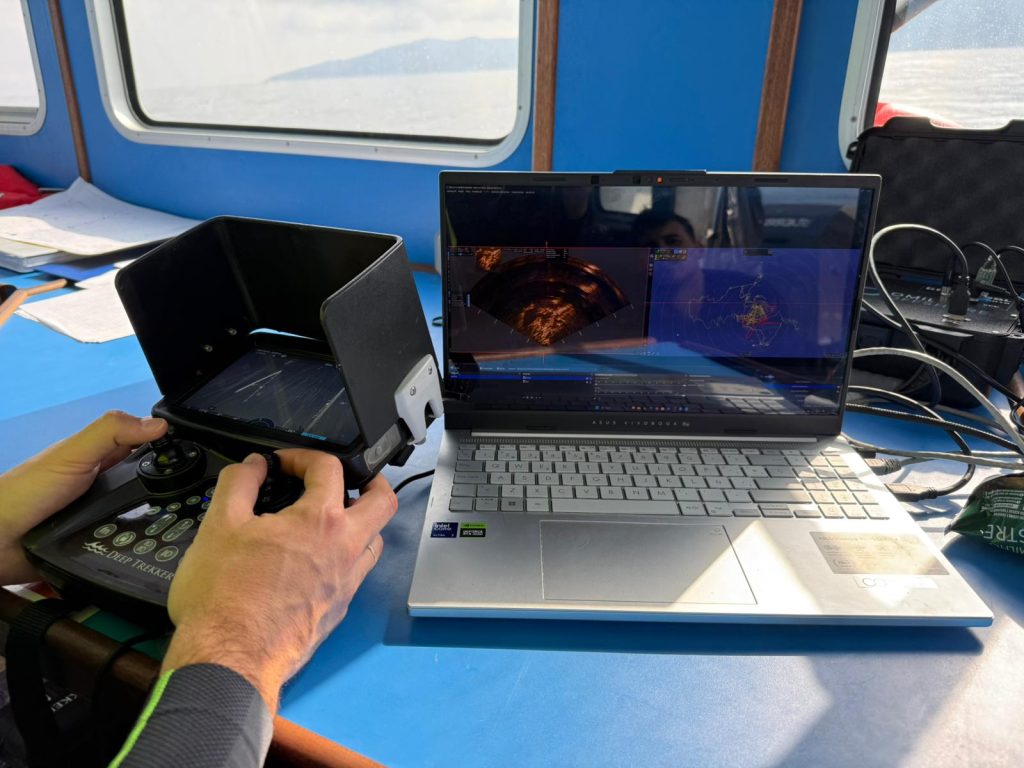
DemoSATH includes a broad environmental monitoring programme covering both the aerial and marine environment.
The activities carried out include:
- Bird and bat monitoring
- Underwater noise measurements
- ROV inspections of the platform, mooring system, anchors and seabed;
- Environmental DNA sampling
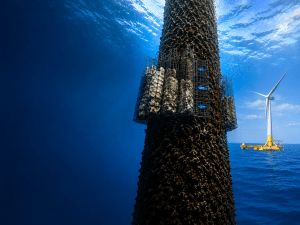
- Monitoring of marine colonisation
- Observation of fish and other mobile fauna
- Analysis of the ecological development of submerged surfaces
Together, these activities provide long-term information on how a floating wind installation interacts with its surrounding environment under real offshore conditions.
They also help identify the capabilities and limitations of different monitoring approaches, providing useful information for defining future environmental programmes and supporting more evidence-based project planning.
Testing Nature-Inclusive Design measures
The study also refers to the possibility of incorporating biodiversity-related measures directly into floating wind infrastructure rather than considering them only once the technology has already been designed.
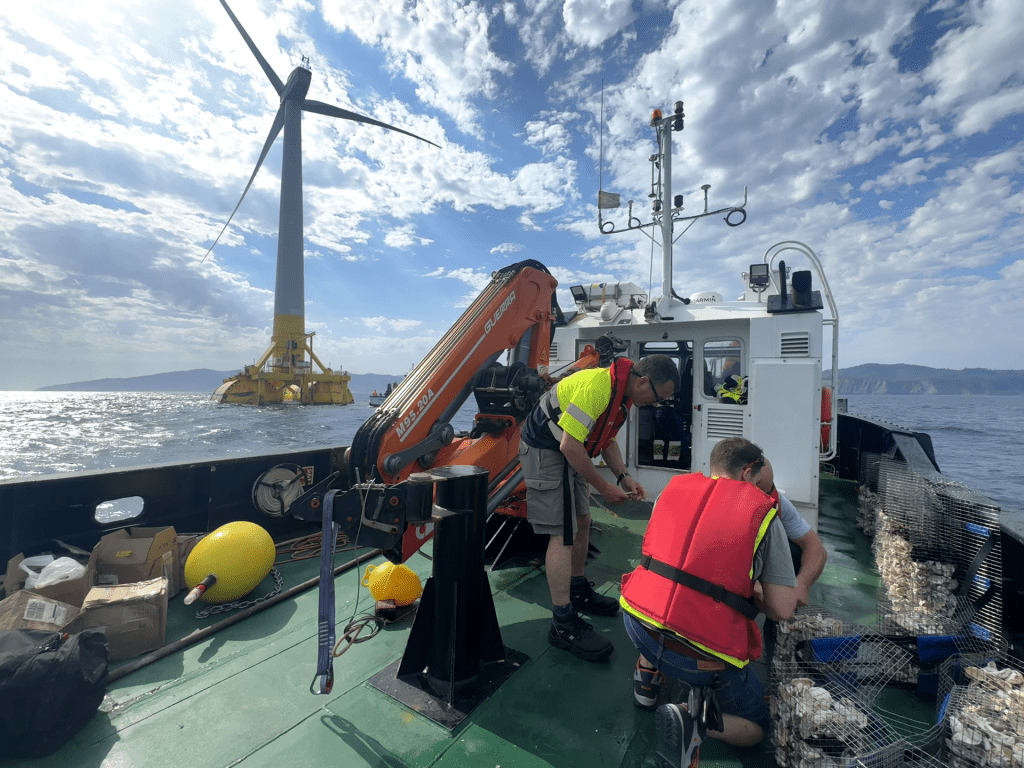
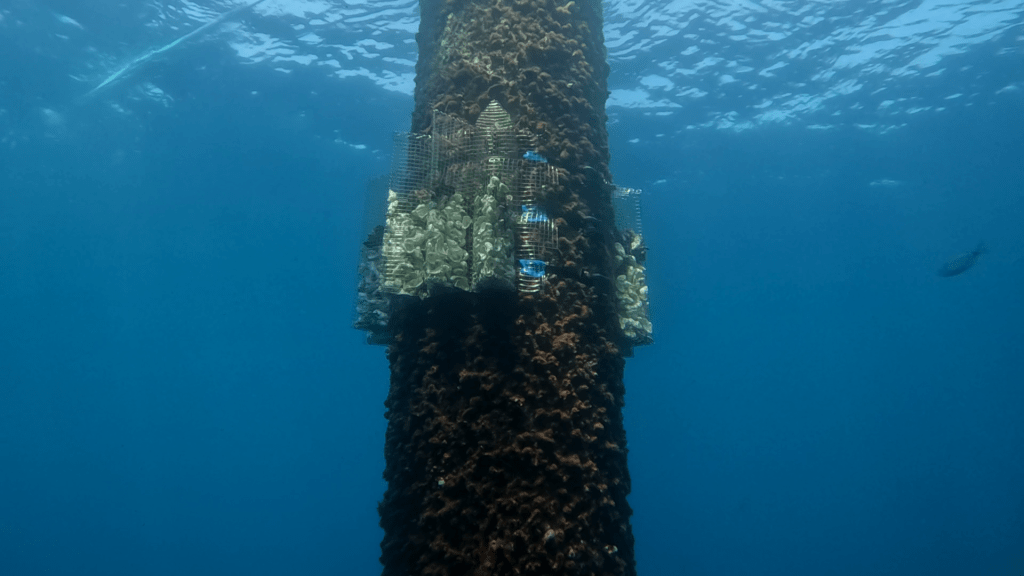
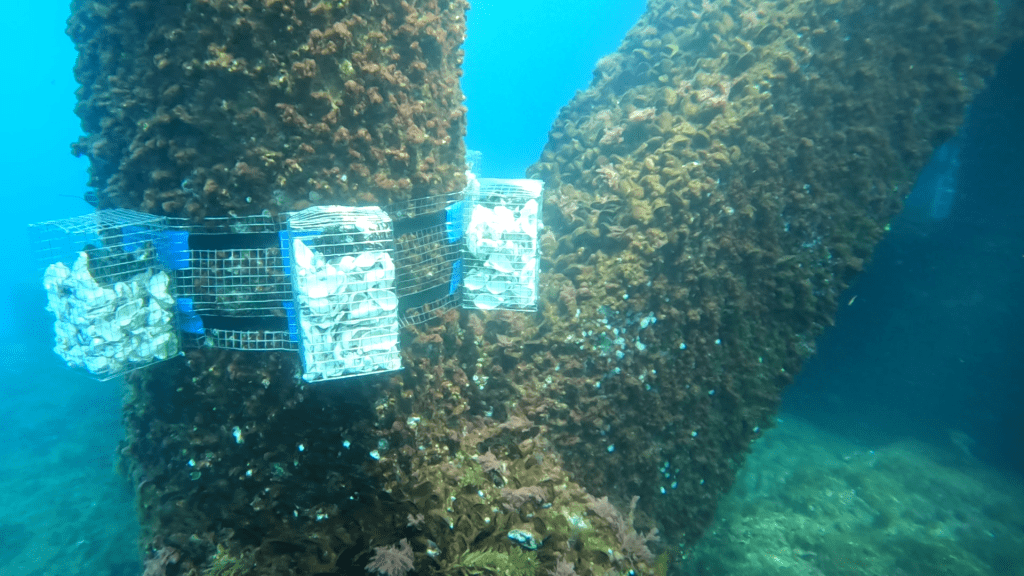
Through DemoSATH Lab, several Nature-Inclusive Design elements have been installed on submerged parts of the platform. Their purpose is to study how different surfaces and structures may influence colonisation and habitat complexity.
The project is also testing systems related to multi-trophic aquaculture, including elements intended for oysters, clams, mussels and algae.
These activities are part of an experimental and monitoring process designed to provide real-scale information on installation, durability, biological development and compatibility with the operation of the floating platform.
This is particularly relevant as floating wind moves towards larger deployments. Testing these measures on an operating demonstrator makes it possible to identify practical limitations, refine designs and generate data before considering their application at a broader scale.
Coexistence with other uses of the sea
Floating wind development in the Mediterranean will take place in areas already used by fisheries, maritime transport, tourism and other activities. The study therefore places particular emphasis on coexistence and stakeholder engagement.
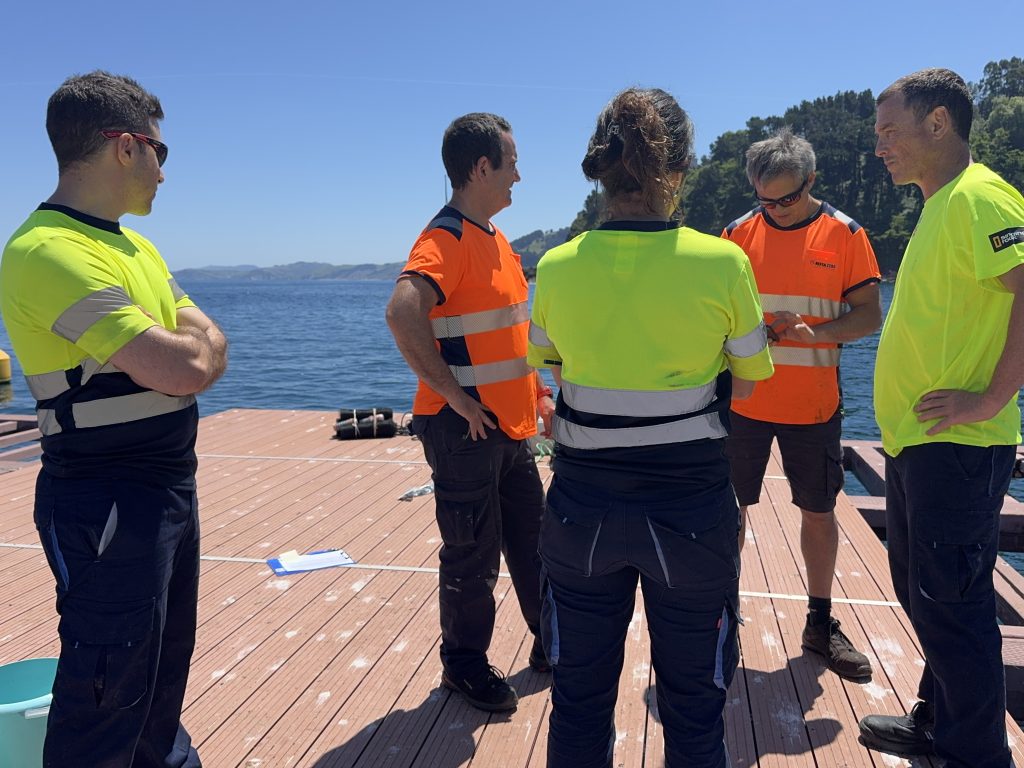
DemoSATH’s environmental and research programmes involve collaboration with specialist companies, research centres, fisheries and marine operators. This multidisciplinary approach provides practical experience of how different technical, environmental and maritime perspectives can be integrated around an operating floating wind project.
The project also generates observed data that can support discussions around interactions with marine activities and the surrounding ecosystem. While the conditions of each future project will be different, this type of evidence can improve the quality of planning and stakeholder dialogue by reducing reliance on assumptions alone.
As floating wind develops towards commercial scale, this cooperation will become increasingly important. Future projects will require continued coordination between developers, public authorities, grid operators, ports, industrial partners, research organisations and marine stakeholders.
In this context, demonstration projects such as DemoSATH provide a valuable intermediate step: they make it possible to test technologies and operational approaches, identify limitations and generate evidence before their application at larger scale.



 English
  Spanish