FLOAT&M: Advances in floating wind energy operation and maintenance

Middle East Energy 2023
10/02/2023
Floating Offshore Wind Asia (FOWA)
08/03/2023
FLOAT&M 2023

FLOAT&M is a project involving a consortium formed by: Saitec Offshore Technologies, as project coordinator; Aeroblade, Alerion, Sener, Mugape, Nautilus, Ditrel, Vicinay Cadenas, Lumiker, Vicinay Sestao, Core Marine, Sidenor, Inalia, and Navacel. It also relies on the collaboration of research centers such as Tecnalia, Tekniker, CEIT, Azterlan, MU, Sidenor R&D, and Vicinay Marine Innovación.

The objective is to create a comprehensive solution focused on the operations and maintenance (O&M) of floating offshore wind energy, attempting to respond to the multiple challenges that arise during this phase of projects. Through the use of new technologies and digital tools—such as drones, robots, connectors, and digital solutions, among others—the aim is to improve efficiency, facilitate asset monitoring, and reduce personnel interventions to increase project competitiveness.

In 2022, some of the lines of action for FLOAT&M included the following:

The development of data-driven mathematical models to estimate maintenance costs (reactive, preventive, and predictive).

Additionally, research into different remote and automated access and inspection strategies on floating platforms, which has made it possible to work on a baseline document for the inspection and maintenance of mooring lines in floating wind farms.

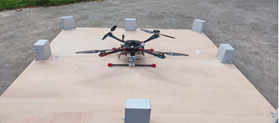
The use of drones has also been addressed by designing a sensorized beacon system for the floating platform, associated with the autonomous landing and takeoff of drones on mobile floating platforms. The next step will be the validation of the device in a demonstrator in a real-world environment.

Another development under study is the feasibility analysis of connecting and disconnecting the umbilical cable remotely, taking into account the loads, required distances, and sizing of the equipment necessary to perform the operation.

Furthermore, in order to develop fiber optic-based strain measurement systems, weldable brackets for Bragg gratings have been designed and developed, achieving a linear response across a wide range of strains.

Finally, it is worth noting that new anticorrosion, anti-ice, antifouling, and eco-friendly coatings and surface treatments for concrete and/or steel have been carried out and validated. These feature an adaptable and versatile formulation that favors the recoatability of the system, increasing its service life with a special emphasis on reducing maintenance costs and improving repairability.


This project has received financial assistance charged to the expenditure budget of the Department of Economic Development, Sustainability, and Environment of the Basque Government and the European Regional Development Fund (ERDF).

en_GBEnglish