Building on ten years of engineering development and the experience gained through DemoSATH, we have introduced new design improvements to SATH, with particular attention to how the platform is built, assembled in port and maintained offshore.
Ten years of developing SATH have taken us from early engineering studies and wave tank testing to operating a full-scale floating wind turbine at sea. That experience is now helping us refine the design for commercial projects, where manufacturing processes, port infrastructure and long-term operational requirements all influence the final cost of a floating wind platform.
A significant part of this work draws on what we have learned from DemoSATH, Spain's first grid-connected floating wind turbine. Operating at the BiMEP test site off the Basque coast since 2023, DemoSATH has provided us with data from real offshore conditions, including waves reaching 13.12 metres and wind gusts of up to 144 km/h. The project's operational period has also been extended until 2027, allowing us to continue gathering valuable experience at sea.
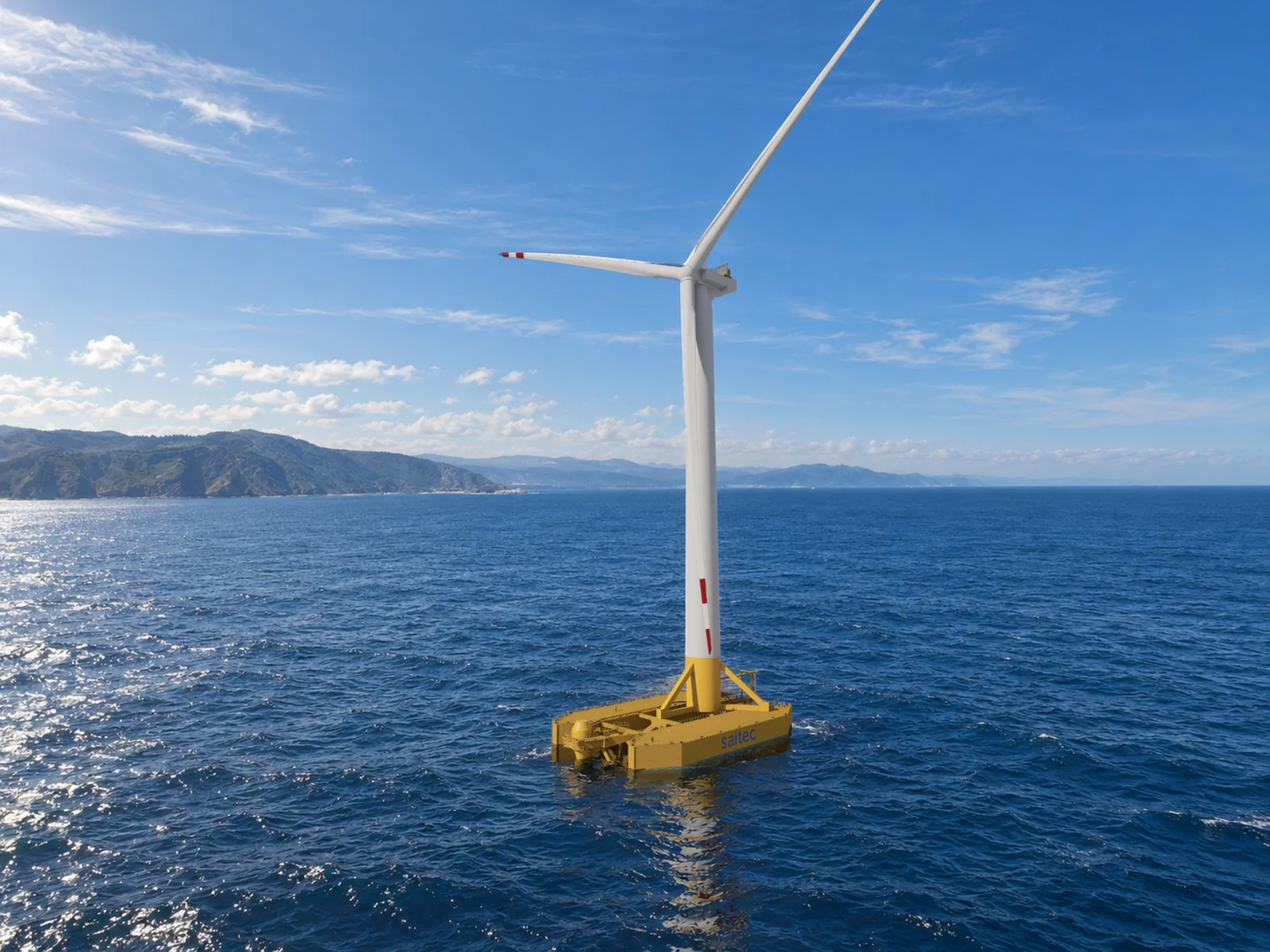
The latest SATH design maintains the mass and buoyancy distribution of the original concept, together with equivalent motion periods. This allows us to preserve the hydrodynamic characteristics developed and assessed through DemoSATH while making changes to other aspects of the platform.
Building on established construction methods
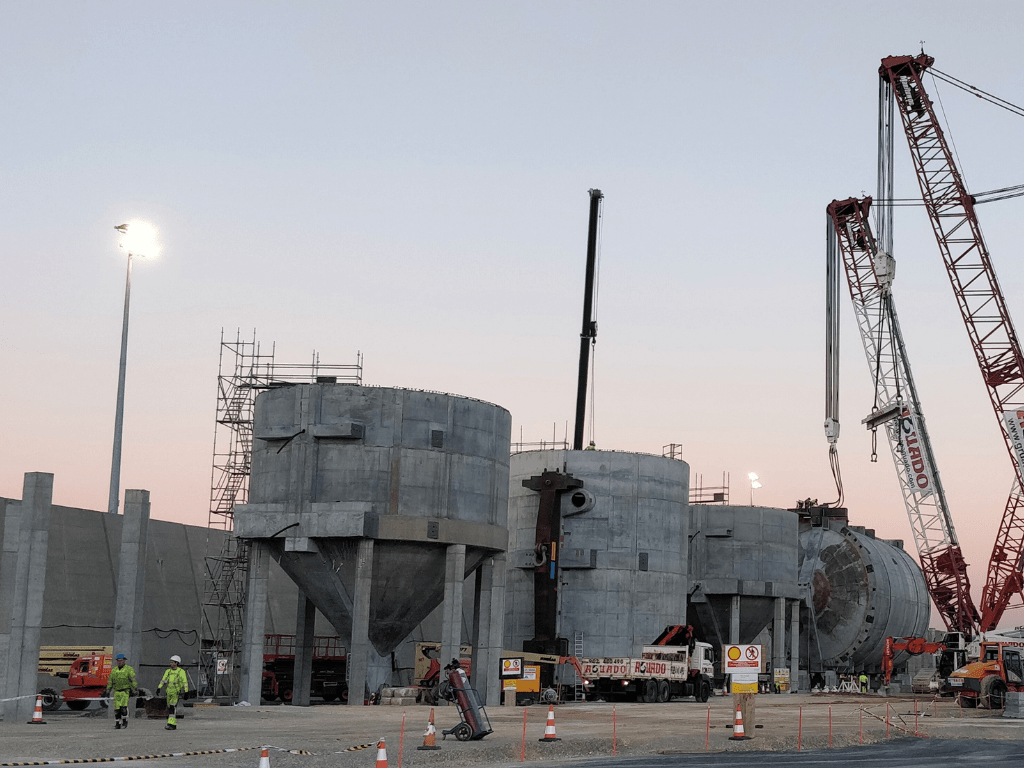
Our updated manufacturing strategy combines modular construction with slipform casting, a technique widely used for large concrete structures. The dimensions of the SATH hull are comparable to those of concrete caissons commonly built for port infrastructure, where similar construction methods have been used for decades.
This is particularly useful when considering how SATH could be manufactured in different locations. Rather than depending entirely on specialised equipment developed for floating wind, the construction process can draw on machinery, expertise and infrastructure already familiar to the civil engineering and port construction industries.
The revised sequence also removes the need to tilt the hull during construction, reduces the number of construction joints and avoids the use of heavy-lift cranes during hull fabrication.
Taken together, these changes are intended to simplify construction and make the process easier to reproduce when manufacturing several platforms.
Making port requirements part of the design
Port infrastructure has been another important consideration in the latest development of SATH.
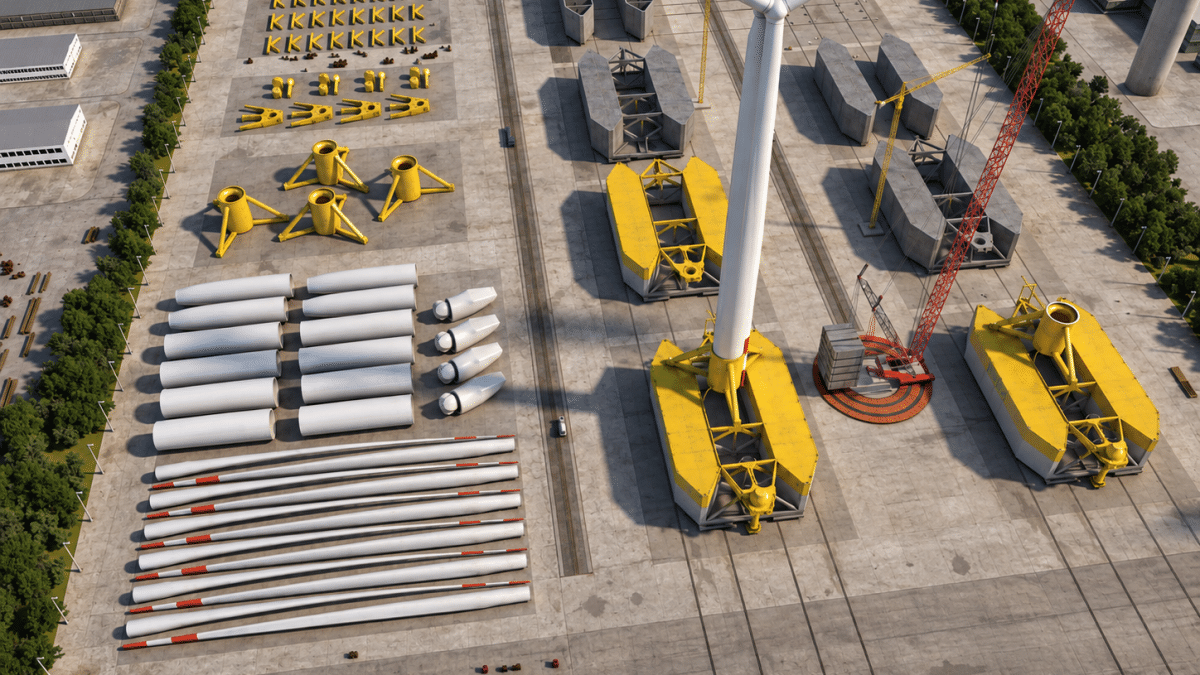
The platform can be assembled with the wind turbine already installed before being towed offshore, an approach we demonstrated with DemoSATH. Even in this configuration, SATH maintains a draft of less than 10 metres.
This matters because water depth can limit which ports are suitable for assembling and deploying floating foundations. A relatively low draft allows more locations to be considered and, depending on the facilities available, can reduce the need for additional equipment such as transport barges or semi-submersible vessels.
The design has therefore been developed with the practical conditions of port-based manufacturing in mind, including the equipment required to construct, assemble and launch each platform.
Looking at maintenance before the platform reaches the water
We have also increased the usable deck area to nearly 2,000 m², providing more room for inspections, equipment and maintenance activities.
The additional space is particularly relevant for major corrective interventions. Being able to carry out certain operations offshore could avoid the need to disconnect the platform and tow it back to port, although the requirements will depend on the type of intervention.
Another characteristic we have retained is SATH's passive stability. The platform achieves stability through its geometry, without permanent or active ballast systems. This avoids the additional equipment and maintenance associated with active ballast arrangements.
Both decisions reflect the importance of considering how a platform will be operated throughout its service life, rather than focusing exclusively on its construction and installation.
Considering costs throughout the platform's lifecycle
In the latest SATH development, CAPEX and OPEX have been considered from the design stage.
The construction sequence influences the equipment and time required in the manufacturing yard. Draft requirements affect the choice of port and the operations needed for deployment. Once offshore, accessibility and the number of auxiliary systems influence maintenance requirements.
These factors are closely connected, and changes made during engineering can have consequences across several stages of a project's lifecycle.
Our work now focuses on translating these design improvements into manufacturing processes that can be repeated across projects, using the industrial resources available in different regions.
The objective is to retain the hydrodynamic behaviour demonstrated through DemoSATH while making construction, deployment and offshore operations more practical for commercial-scale floating wind projects.